ServicesRoof Replacement
Roof Replacement in Delaware, OH
When a roof is past repairing, we strip it to the decking, fix what we find underneath and install a complete new system. You get photos of each stage, so you can see the parts of your home that disappear under shingles by the end of the day.
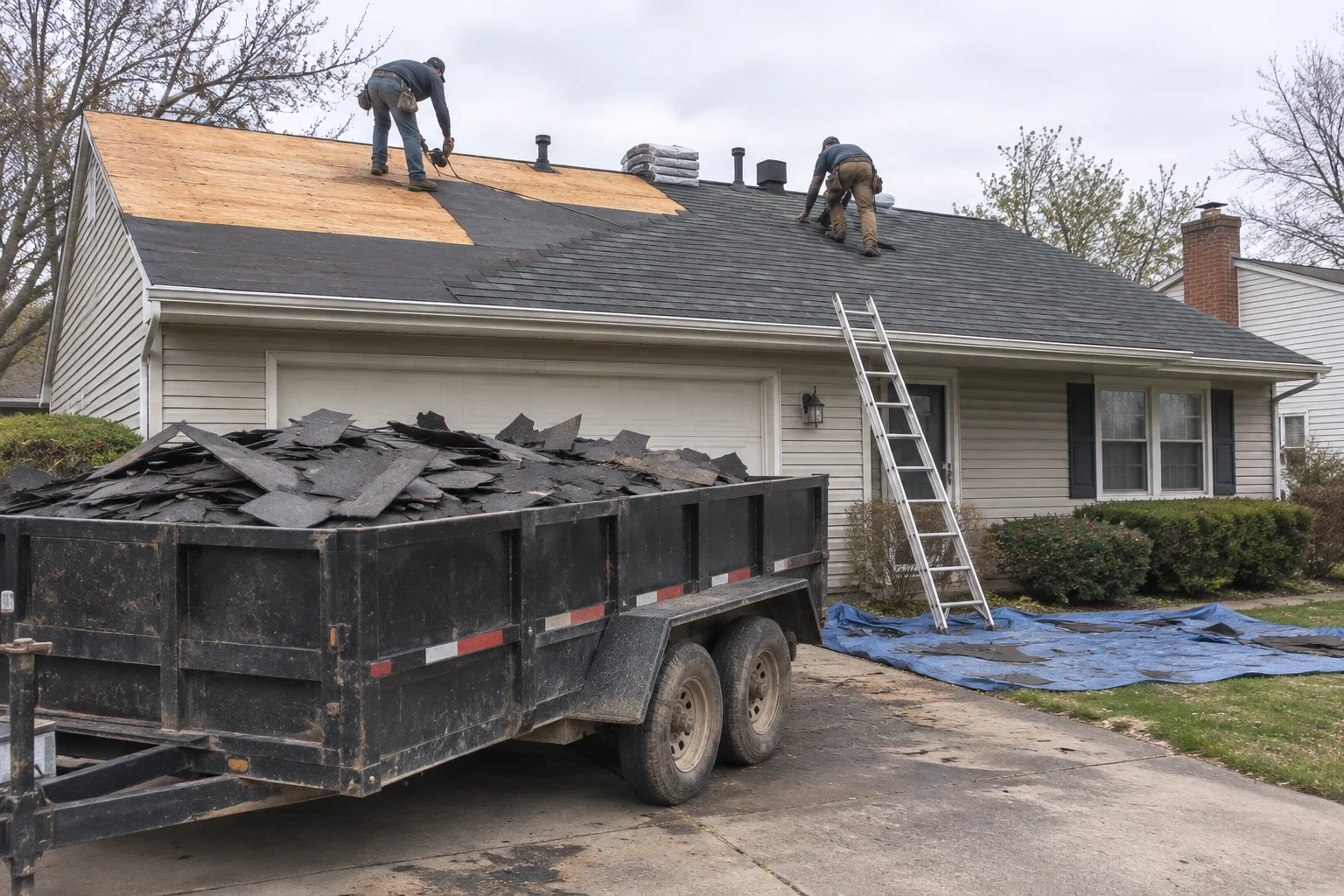
When replacement beats another patch
Replacement is worth it once the wear is spread across the whole roof rather than sitting in one spot. Shingles stripped of most of their granules, edges curling on several slopes, or an old layer already buried under a newer one all lead to the same answer. Patches at that point usually hold for a season or two before water finds the next weak spot.
If you have a handful of loose shingles or one cracked vent boot, roof repair is usually the better use of your money, and we will say so. When the answer is not clear, a roof inspection gives you pictures and a straight opinion before you commit to anything.
Central Ohio winters test an older roof. Freeze and thaw cycles push meltwater under worn shingles and into the eaves, so the underlayment and edge details we install count as much as the shingles you see from the street.
What a full replacement includes
- Complete tear-off
- We remove every old layer down to the wood. Going over an existing roof hides rot and adds weight, so we do not do it.
- Decking check and repair
- Once the boards are exposed, we walk the whole deck and photograph soft or delaminated sections. Damaged sheets are replaced before anything new goes on, and you see the before and after pictures.
- Ice and water shield where it counts
- A self-adhering membrane is rolled along the eaves and down every valley, the places ice dams and concentrated runoff attack first. The remaining deck gets a synthetic underlayment that sheds water and lies flat under the shingles.
- New flashing and drip edge
- Step flashing at walls, chimney flashing and metal drip edge are installed new instead of reused. Old flashing is a common source of leaks on otherwise sound roofs.
- Balanced attic airflow
- Fresh air should enter low at the soffits and leave high at the ridge, so we check both before choosing vents. An attic that moves air keeps shingles from baking in summer and limits frost on the underside of the deck in winter.
- Shingles, ridge cap and cleanup
- Shingles are laid to the manufacturer's nailing pattern, finished with matching ridge cap. We run magnetic sweepers across the lawn and driveway before we leave.
Signs your roof may need replacing
Bald or granule-heavy shingles
Dark patches where granules are gone, or piles of grit at the downspouts, mean the shingles have lost their protection from sun and weather.
Curling or cupping across slopes
One curled tab is a repair. Edges lifting on several sides of the roof means the shingles have aged out together.
Leaks in more than one place
Stains on ceilings in different rooms, or a leak that returns after a fix, often trace back to underlayment that has failed broadly.
A sagging roofline
A dip between rafters usually means the decking has softened from long-term moisture. That needs to be opened up and seen.
Two layers already on the roof
If a previous roofer went over old shingles, the next roof has to come off down to the wood either way.
How the work goes
- 1
Walk-through and assessment
We go up, look at the shingles, flashing, vents and attic, and take pictures of what we see. You get those images with a written estimate that lists each part of the job.
- 2
Choosing materials
We go over shingle lines, colors and the underlayment and vent options that suit your home. You see samples before anything is ordered.
- 3
Permits and scheduling
We check what your city or township requires and handle the permit when one is needed. We plan the day around the weather, not the other way around.
- 4
Installation day
Tarps go over landscaping and the driveway before tear-off. Most homes are stripped and fully covered again the same day, and we capture the deck, the underlayment and the flashing on camera as each goes on.
- 5
Final walk and handover
We sweep for nails, walk the finished roof with you and hand over the complete set of photos from start to finish.
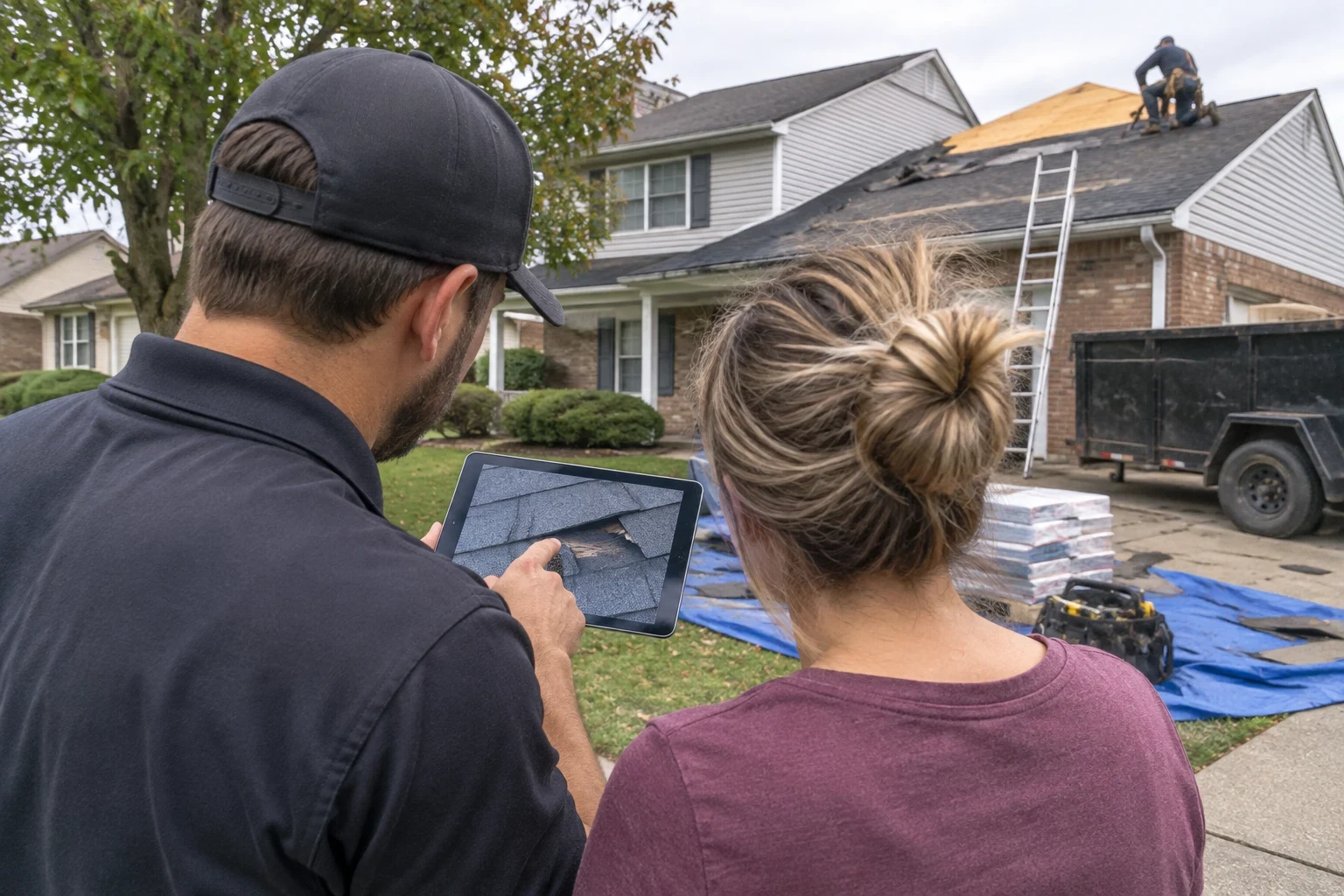
What shapes the price of a new roof
We price each roof from measurements and photos taken on your home, never from a flat figure per house. Your written estimate gives every part of the job its own line. What sits under the old shingles is often the largest unknown, so before work starts we explain how any decking repairs will be priced.
- Roof area and steepness
- The measured area of your roof drives how much material we order. Steeper slopes call for extra safety rigging and slow the pace of work.
- Layers to remove
- A second or third layer of shingles adds tear-off time and disposal weight.
- Decking condition
- Rotted or delaminated boards are replaced per sheet. You see a picture of every board before it is counted.
- Roof details
- Chimneys, skylights, dormers and multiple valleys each need their own flashing work, and a simple gable roof needs far less.
- Shingle line and ventilation
- Architectural and premium shingles cost more than basic lines, and adding ridge or soffit vents adds to the material list.
Questions homeowners ask about a new roof
Something not covered here? (740) 807-5263
How many days will my new roof take?
Once we begin, most homes are done in one to two days. Big or steep roofs, or ones with a lot of decking to repair, can run longer. A roof is never left open overnight without a cover.
Do I have to be home during the work?
You do not. We want to meet you before tear-off and walk the completed roof with you afterward. Tear-off and nailing are loud. Moving cars off the driveway and taking mirrors and framed pictures off upstairs walls also helps.
Can you lay new shingles over my current ones?
We don't do that. A second layer hides soft decking and tired flashing, and the next roofer has to strip both layers regardless. Taking everything off lets us photograph the deck and fix it properly.
Will I see what was hiding under the old shingles?
You will. We photograph the bare deck, every board we swap out, and the underlayment and flashing as they go on. The complete set is yours when the job wraps up.
Should my gutters be replaced at the same time as the roof?
Often it is worth it if they sag or are pulling loose, because the drip edge and the gutter line work as a pair. While we are there, we can check your gutters, soffit and fascia and tell you plainly whether they can stay.
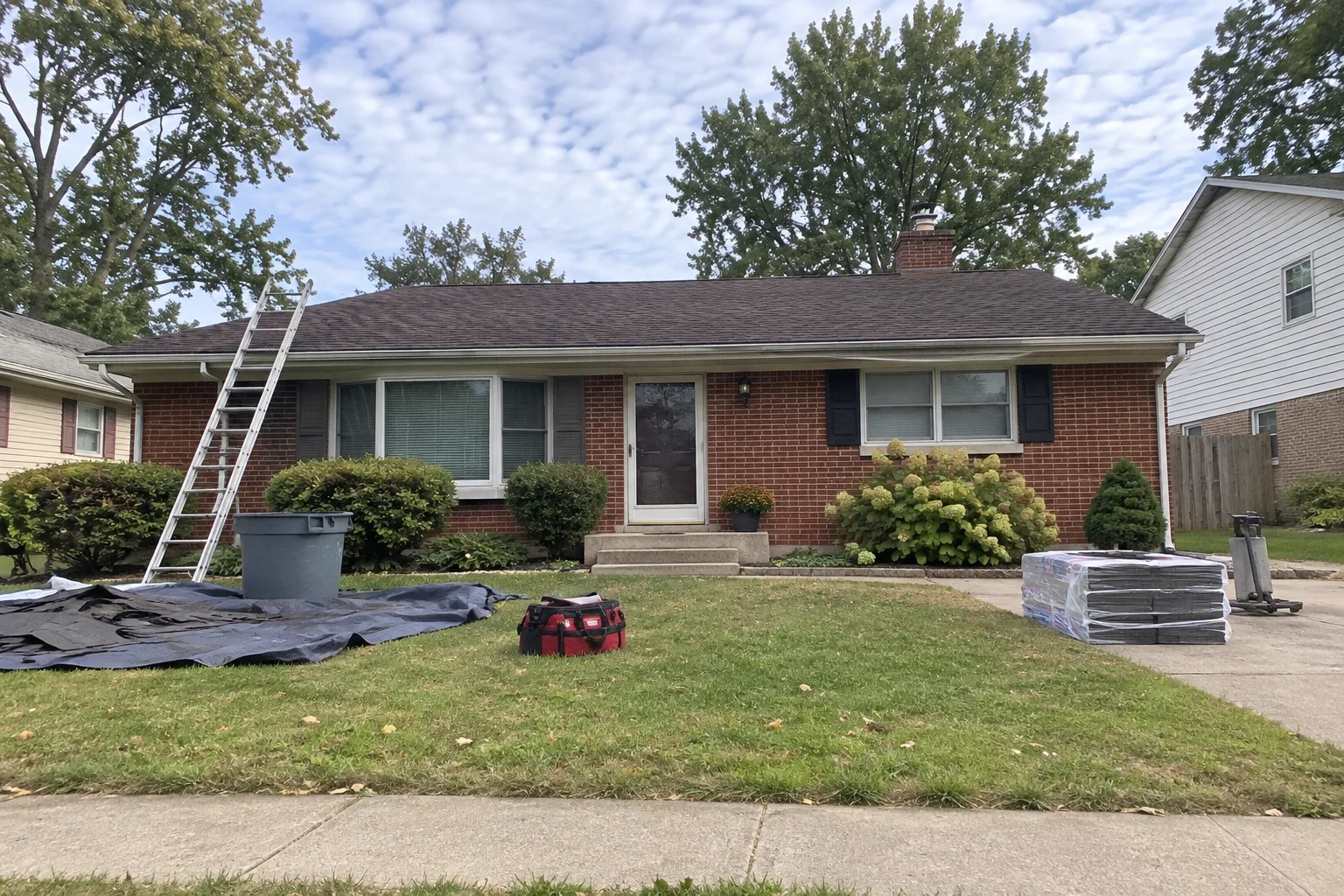
See your roof before you decide
We will look over your roof, take pictures of what we find and walk you through whether replacement is the right step for your home in Delaware or nearby towns like Powell and Sunbury.